
Church and community kitchen walk-ins often sit lightly used for days, then face a large load before a funeral meal, festival or food drive. Idle periods let dust build, and surges expose weak parts. Call for repair when the box is warm, and have it checked before big events.
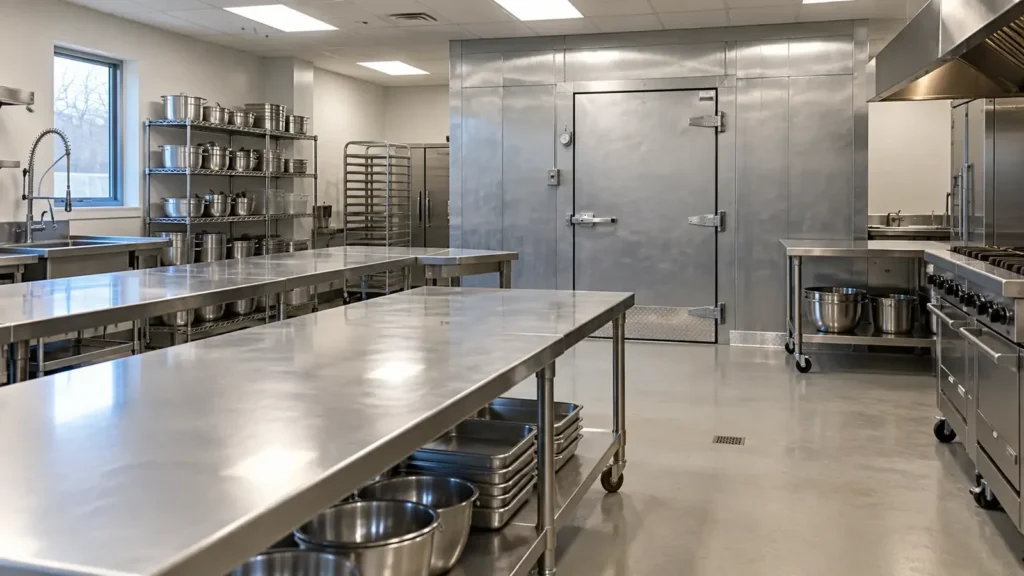
Fellowship halls, food pantries and community kitchens in the Hattiesburg area feed a lot of people on limited budgets. A failed walk-in on the morning of an event is the kind of surprise nobody has time for.
How churches and community kitchens use walk-ins
Use is uneven. A walk-in may hold a few items most of the week, then take a truck of donated food or a full event menu on Friday. Volunteers rotate, so habits vary: doors are propped open while carrying trays, shelves are overloaded, and nobody is sure who checks the temperature. Many boxes are donated or second-hand, with unknown history.
Where the pressure comes from
| Pressure point | What tends to fail |
|---|---|
| Event surges | Warm food loaded all at once |
| Idle periods | Dust on coils, stale gaskets and stuck controls on restart |
| Volunteer turnover | Nobody owns the log or the checks |
| Donated or used boxes | Unknown age, refrigerant and wear |
| Propped doors during events | Warm air and frost |
| Limited budget | Repairs delayed until failure |
What repair help covers
Repair help covers the usual faults: warm box, ice, fans, compressor problems, gaskets, hinges, controls and electrical faults. A technician can also look at an inherited or donated walk-in and tell you what shape it is in, so you can decide whether to repair it or plan for a replacement.
Food safety and records
Food served to the public still needs safe handling, even in a volunteer kitchen. Keep cold food at 41 degrees Fahrenheit or below, check with a probe thermometer and keep a simple log. Ask the health department whether your kitchen has any permit or inspection requirements, since these vary by activity and location.
How to prevent breakdowns
- Assign one person to check and log the box before and after each event.
- Have the box checked a week or two before a major event.
- Load in stages and cool hot food before storing it.
- Post a sign about keeping the door closed.
- Keep a repair contact number taped near the door.
- Keep records of repairs and the age of the equipment.
If the walk-in fails
If the box is warm, keep the door closed, probe the food and call for repair. Move perishable food to another cold space or coolers with ice if the wait will be long. Do not serve food you are unsure of. The time-limits guide explains the reasoning.
Planning around your events
List your biggest events of the year: homecoming, revivals, funeral meals, festivals and holiday drives. Book a check two weeks before each, when you still have time to fix what turns up. After an event, clean the box, wipe up spills and note anything that behaved oddly so it can be handled before the next one. Keeping a short logbook by the door, with dates and readings, gives new volunteers something to follow.
Working with a limited budget
Many congregations run on donations, so repairs need to be sensible. Ask the technician to separate what must be done now from what can wait, and to explain the reasons. Small fixes such as cleaning coils, replacing a gasket or moving stock away from the fan are cheap and effective. If the box is very old, ask for a plain comparison of repair costs and replacement, and consider whether a smaller used unit or shared storage might serve.
What to tell us when you call
- Where the kitchen is and who will meet the technician.
- The age of the box if known, and whether it was donated.
- What it reads and what it should read.
- Whether it has been unused for a while.
- Any noise, ice or water.
- When your next event is.
Related: daily and weekly staff checks and repair or replace. See the who we serve page, the troubleshooting guide, the maintenance checklist and food safety in Mississippi.
Other community kitchens we serve: hospitals and care homes.
Questions from church and community kitchen volunteers
Our walk-in was donated. Is it worth fixing?
A technician can inspect it and tell you what is sound and what is not. Ask for options in writing.
Can volunteers check it?
Yes, using the daily checks and a log. They should not open panels or touch refrigerant parts.
What if it fails right before an event?
Call at once, protect food and ask about temporary cold storage while repair is arranged.