
Caterers load and unload walk-ins on tight schedules, often with hot food cooling down for the next day. That heavy, uneven load stresses cooling capacity and doors. Call for repair when the box struggles, cool food before storing it and keep a backup plan for event days.
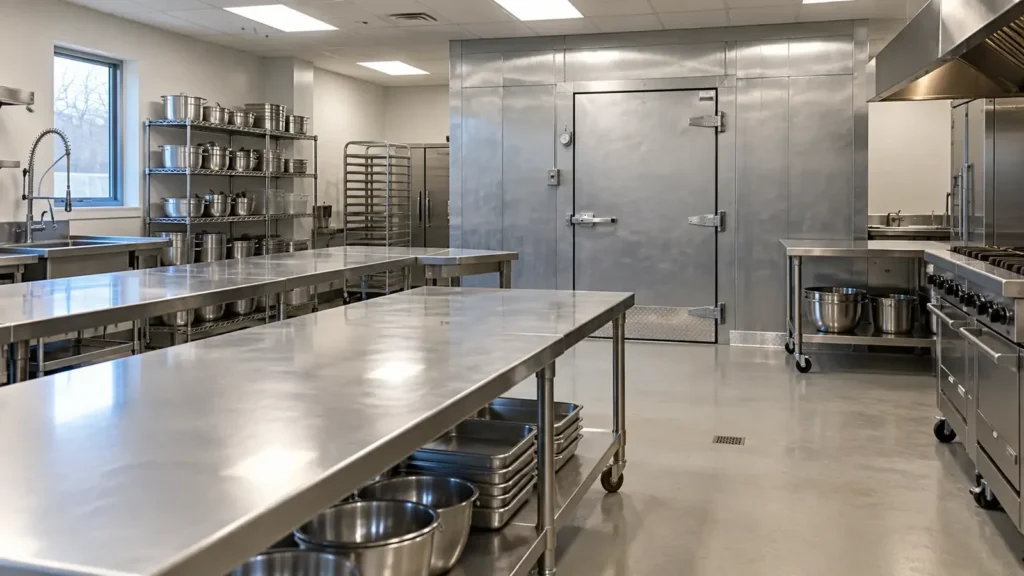
A caterer has one chance to deliver food on time. A walk-in that drifts warm the night before a wedding or a corporate lunch can undo weeks of planning.
How caterers use walk-ins
Caterers cook ahead and store food overnight, then pack trays and coolers in a rush. The walk-in sees large warm loads, frequent openings and a lot of stacking. Space is often tight, so shelves get crowded and airflow suffers. Some caterers use a rented or shared kitchen with a walk-in they do not control.
Where the pressure comes from
| Pressure point | What tends to fail |
|---|---|
| Large warm loads | Slow recovery and warm pockets |
| Crowded shelves | Blocked airflow and uneven temperatures |
| Frequent door openings | Frost and gasket wear |
| Rented or shared kitchens | Unknown maintenance history |
| Event deadlines | Failures at the worst time |
| Transport loading | Doors left open while packing |
What repair help covers
Repair help covers warm boxes, slow recovery, ice, fan and compressor faults, gaskets, hinges, controls and electrical problems. A technician can also review how the box is loaded and suggest changes, such as shelving layout and staging, that help it keep up with your event schedule.
Food safety and records
Cool cooked food quickly in shallow pans before storing it, and check with a probe that it is at or below 41 degrees Fahrenheit before transport. Keep a temperature log for the walk-in and for transport, and ask the health department about the records your permit requires.
How to prevent breakdowns
- Check the box the day before every event.
- Use shallow pans and ice baths to cool hot food.
- Load in stages, not all at once.
- Keep space around the evaporator clear.
- Fix gasket and door problems promptly.
- Keep a backup cooler plan and a repair contact.
If the walk-in fails
If the box fails before an event, probe the food and decide quickly what can be kept. Move key items to coolers with ice, call for repair and tell your client early if timing may change. The TCS foods guide helps decide what is at risk.
Planning around your event calendar
Your calendar is your maintenance schedule. Book service in the quiet weeks, and avoid leaving a known problem until the week of a major event. The day before a large job, run a check: temperature, door seal, fans, and an honest look at how much stock the box can actually hold. If the box is barely coping in normal weeks, a large event will push it over. Ask a technician whether staging, extra shelving or a supplementary cold room would help.
Protecting your reputation
Clients remember the meal, not the equipment problem. Having a documented backup plan, with insulated coolers, ice supplies and a repair contact, means a failure becomes an inconvenience and not a disaster. Keep temperature records for each event, since they show diligence if a question ever arises, and keep repair invoices together for your own reference and for insurance.
What to tell us when you call
- Whether you own the walk-in or rent the kitchen.
- What is in the box and when the next event is.
- The temperature and how long it has been high.
- How the box is loaded on busy days.
- Whether fans and the outdoor unit run.
- Any ice, noise or water.
Related: stocking for airflow and slow temperature recovery. See the who we serve page, the troubleshooting guide, the maintenance checklist and food safety in Mississippi.
Related: pizza shops and bakeries and bars and breweries.
Questions from caterers
Why does my walk-in warm up after I load it?
Warm food adds heat faster than the system can remove it. Cool food first, load in stages and check capacity.
Can you help with a rented kitchen?
Call and describe the situation. The kitchen owner may need to be involved for access.
How do I protect an event if the box fails?
Have a backup plan with coolers, ice and a repair contact ready before the event.