
Hotel kitchens often run several walk-ins through early breakfast, banquets and event weekends. Failures show up as warm boxes, ice, noisy fans and tripped breakers. Call for repair early, service every box on a schedule and plan cold storage for busy weekends and storm outages.
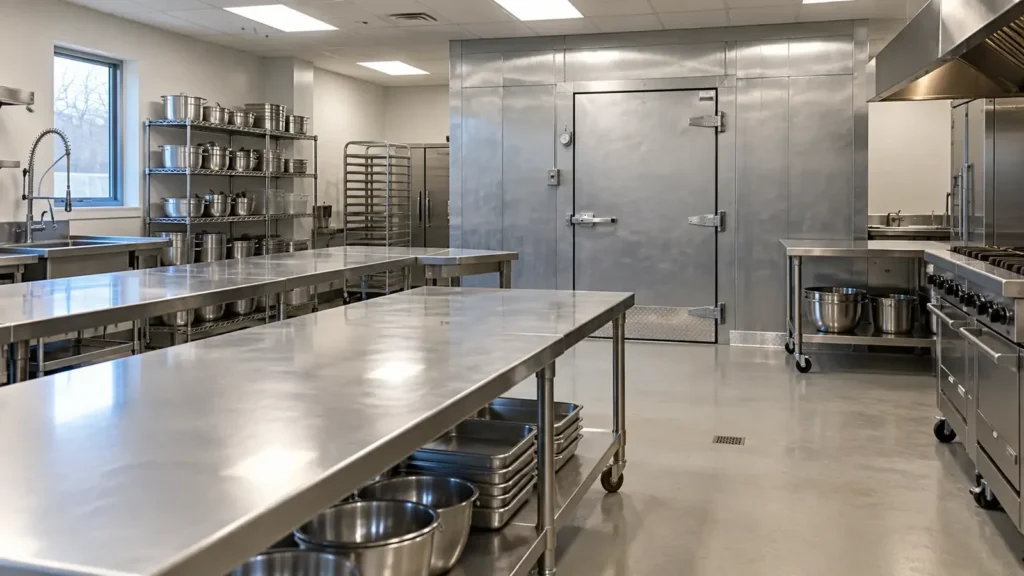
Hattiesburg hotels serve business travelers, families, sports teams and university visitors. When the kitchen runs on a tight schedule, a failing walk-in is a problem for the whole property.
How hotels use walk-ins
A hotel may have a cooler, a freezer and a produce box, and sometimes a separate banquet kitchen with its own. Deliveries arrive early, breakfast prep starts before dawn and banquets add large loads. Staff turnover means habits vary, and maintenance is sometimes handled by general engineering staff with limited refrigeration experience.
Where the pressure comes from
| Pressure point | What tends to fail |
|---|---|
| Early breakfast rush | Peak door traffic while the box is stressed |
| Banquet loads | Large warm loads and crowded shelves |
| Several boxes | More equipment, more chances to miss a fault |
| Event weekends | Full occupancy and no room for downtime |
| Storm season | Outages with a full building |
| General maintenance staff | Faults reported late or misdiagnosed |
What repair help covers
Repair help covers warm boxes, ice, fans, compressor problems, door and gasket damage, controls, sensors and electrical faults, for coolers and freezers of any size. A technician can also survey all the boxes on the property, note their age and condition, and suggest which need attention before the busy season.
Food safety and records
Hotel kitchens are inspected under health rules, and brand standards may add expectations. Keep temperature logs for each box, record any failure and repair, and keep invoices. Ask your health department and brand standards contact what documentation is expected.
How to prevent breakdowns
- Log each walk-in daily and review the logs weekly.
- Service every box before peak season.
- Keep a list of all boxes with age, location and refrigerant if known.
- Train staff on door habits and shelf loading.
- Have a storm and outage plan for the kitchen.
- Keep an approved repair contact on the maintenance board.
If the walk-in fails
If a box fails during service, protect the food first: probe, record, move key items and call for repair. Tell the general manager and the chef. If the outage is widespread, follow the storm recovery steps.
Planning around occupancy and events
Look at your calendar for high-occupancy weekends, football games, graduations, conferences and holidays. Schedule maintenance before them, not during. Ask the kitchen team to report any warm readings or odd noises the same day, and make sure engineering knows who to call. If your property has several boxes, rank them by importance and age, and plan attention accordingly. A short survey visit before peak season can produce a simple list of what to fix first.
Coordinating kitchen and engineering
In many hotels the kitchen sees the symptom and engineering owns the equipment. Delays happen when the message travels slowly. Agree a simple process: the cook logs the reading and calls the on-duty engineer, who calls the repair contact and updates the chef. Keep the number, the box location and the equipment details on a card near the walk-in so anyone can start the call.
What to tell us when you call
- Which box failed, and where on the property it is.
- Cooler or freezer, size and approximate age.
- The reading and how long it has been off.
- Whether other boxes are affected, which may point to power.
- Any noise, ice or water.
- Upcoming events that raise the urgency.
Related: storm prep and annual maintenance. See the who we serve page, the troubleshooting guide, the maintenance checklist and food safety in Mississippi.
Questions from hotel and resort kitchen managers
Can you service several boxes in one visit?
Call and describe how many there are. A survey visit can cover all of them.
Who should report a fault?
Anyone on the kitchen team, to the chef and engineering. Speed matters.
What if the whole building loses power?
Keep doors closed, follow the outage plan and check the equipment before restarting.