
School and campus kitchens run walk-in coolers hard at lunch, then leave them idle over weekends, holidays and summers. Common problems are failures that go unnoticed during breaks, dirty coils, worn gaskets and storm outages. Call for repair, keep temperature logs and check the box before every break.
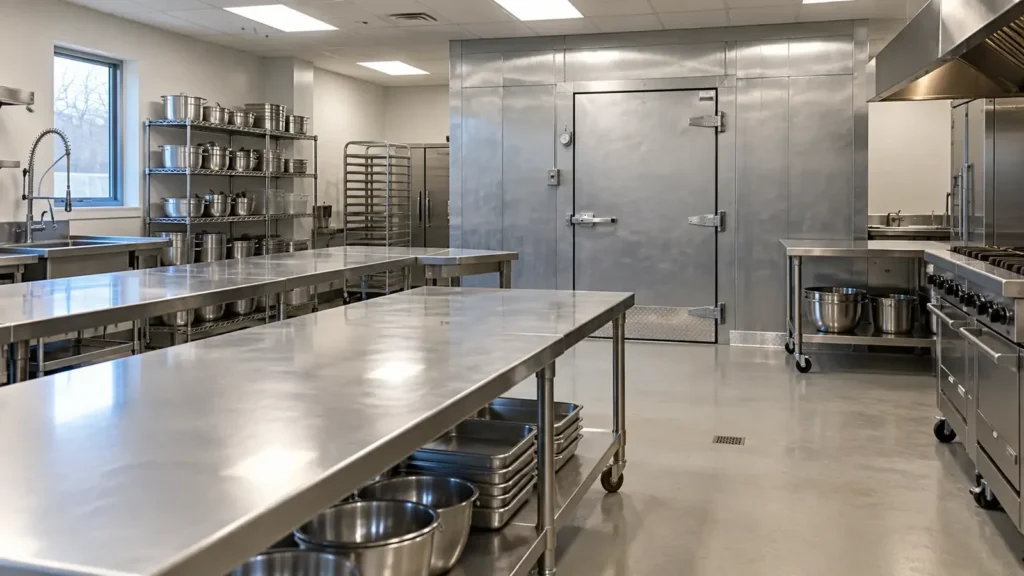
Hattiesburg has public schools, private schools and a large university community, and every one of them relies on cold storage for milk, produce, meat and prepared meals. A failure over a long weekend can mean losing several days of food.
How schools and campuses use walk-ins
Cafeteria walk-ins hold bulk deliveries, milk, fresh produce and prepared items. Universities add dining halls, catering kitchens, athletics facilities and residence hall storage. Demand is heavy at meal times and quiet the rest of the day. Doors open constantly during prep, deliveries arrive in large loads and the box is often left alone for days during breaks, when nobody notices a slow temperature rise.
Where the pressure comes from
| Pressure point | What tends to fail |
|---|---|
| Long breaks and weekends | A fault goes unnoticed for days |
| Big delivery loads | Warm product overloads the system |
| Constant door traffic | Gaskets and hinges wear, frost builds |
| Summer closure restart | Idle units fail on first start |
| Storm outages | Power loss with a full box |
| Shared use by many staff | Doors left open, shelves overloaded |
What repair help covers
Repair help for schools covers the usual walk-in problems: a box that will not cool, ice on the coil, fans that stop, compressor noise, door and gasket damage, controls and sensor faults, and electrical trouble. Technicians can also look at the box before the school year starts, so problems are found in August instead of during the first week of lunch service.
Food safety and records
School food service is inspected under health rules, and many programs keep their own temperature and cleaning records. Keep the walk-in log current, record readings when the box is opened after a break and keep repair invoices with the records. Ask the district or the state health department what documentation your program requires.
How to prevent breakdowns
- Log temperatures every service day, and before and after each break.
- Schedule a service visit before the school year and before summer closure.
- Clean condenser coils before the hot season.
- Replace worn gaskets before they tear.
- Place a probe thermometer where staff can see it easily.
- Train kitchen staff on what to do when the box reads warm.
If the walk-in fails
Keep the door closed, probe the food, and write down the time. Call for repair right away, and tell the manager. If the box will stay warm for long, move the most perishable items to another cold space. Follow the school food-service rules and the health department direction on what to keep. The outage discard guide explains the reasoning.
Planning around the school calendar
The best time for maintenance is when the kitchen is quiet. Book a check in late July before staff return, and again before summer closure so the box is clean, the coils are clear and the settings are recorded. Before a long break, take a reading, empty the most perishable items if practical and ask a facilities person to look in on the box. After the break, log the temperature before restocking. This routine costs little and prevents most of the surprises that schools report.
Making repairs easier to approve
Public and private schools often need quotes, purchase orders or board approval. Ask for a written diagnosis and a clear scope, so the request can move quickly. Keep a file of past repairs and the age of the equipment. When a box is old and failing repeatedly, a written comparison of repair versus replacement helps administrators plan a budget, and the repair or replace guide gives a framework for it.
What to tell us when you call
- Which building and kitchen the walk-in is in.
- Whether it is a cooler or a freezer, and roughly how large.
- The temperature it reads and how long it has been off.
- Whether the fans and the outdoor unit are running.
- Any ice, noise or water you see.
- How soon food service starts, so the visit can be planned.
Related: storm prep and pre-summer checklist. See the who we serve page, the troubleshooting guide, the maintenance checklist and food safety in Mississippi.
Questions from school kitchen staff
Can you check the walk-in before school starts?
Yes. Call and ask for a pre-season check of the box, coils, gaskets and controls.
Who should keep the temperature log?
Assign a named staff member for each service day, with a backup.
What if it fails during a break?
Call as soon as you find it, protect the food and record times. A break-time failure is the reason to check the box before you leave.