
Hospitals, clinics and care homes serve people who are more vulnerable to foodborne illness, so a failing walk-in demands a fast, careful response. Keep detailed temperature records, act at the first warm reading and plan for outages. Call for repair and follow your facility policy and health department direction.
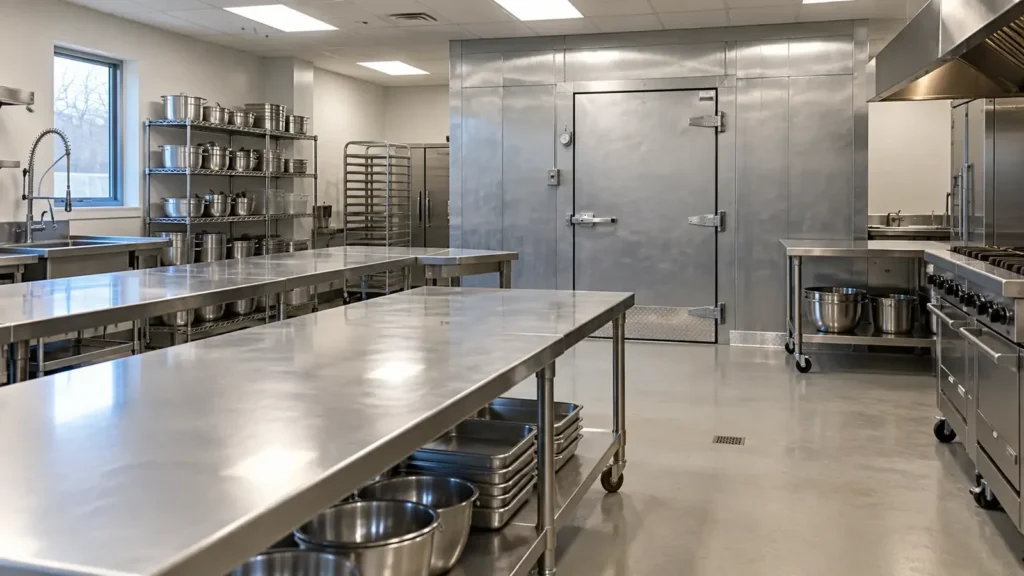
Hattiesburg has hospitals, clinics, assisted living homes and nursing facilities, all with kitchens that run all day. Their walk-ins hold meals for people who cannot easily eat elsewhere.
How healthcare kitchens use walk-ins
Healthcare kitchens prepare many meals a day, often with special diets and tight schedules. They store large quantities of dairy, produce, protein and frozen items. Some facilities have a central production kitchen and satellite pantries. Equipment often runs around the clock, with limited chance to shut a box down for a day.
Where the pressure comes from
| Pressure point | What tends to fail |
|---|---|
| 24-hour operation | Little time for maintenance windows |
| High-risk consumers | Low tolerance for any temperature lapse |
| Special diet foods | Small quantities of critical items |
| Older buildings | Older boxes and electrical systems |
| Outage risk | Storm power loss with a full census |
| Staff turnover | Inconsistent logging and checks |
What repair help covers
Repair help covers warm boxes, ice, fan and compressor faults, gaskets and doors, controls, sensors and electrical problems in coolers and freezers. A technician can also help plan maintenance so that work happens with minimal disruption, and can document what was done.
Food safety and records
Healthcare facilities usually follow strict food-safety and accreditation expectations on top of health department rules. Keep continuous temperature records, act on any reading above the limit, and document corrective actions. Ask your food-service director and the health department what documentation and thresholds apply, and follow your own policy first.
How to prevent breakdowns
- Use a written temperature log with sign-off.
- Consider continuous monitoring with alarms.
- Schedule preventive maintenance with the kitchen manager.
- Keep replacement parts and a repair contact ready.
- Have an emergency menu and backup storage plan.
- Test the backup power plan for the kitchen.
If the walk-in fails
Follow the facility emergency procedure. Probe the food, record times, move high-risk items to backup cold storage and notify the food-service director. Call for repair right away. Decisions about discarding food should follow the facility policy and health direction. The outage guide explains the general reasoning.
Planning maintenance with minimal disruption
Work in a healthcare kitchen has to be planned around meal service. Agree a schedule with the food-service director, prepare backup cold storage and move stock before work begins. Ask the technician for a time estimate and what the box will do during the visit. After work, confirm temperatures before restocking, and log the readings.
Documentation and audits
Accreditation and health reviews look at records. Keep the temperature log, cleaning schedule, corrective action notes and repair invoices together and easy to find. Include notes on what caused each failure and what was done to prevent a repeat. A tidy record shows the kitchen is in control even when equipment fails.
What to tell us when you call
- The facility name, kitchen location and who will meet the technician.
- Which box, and what is stored in it.
- The reading, how long it has been off and what has been done.
- Whether other boxes or the building are affected.
- Any access restrictions and best times for work.
- Whether backup storage is in place.
Related: HACCP basics for cold storage and temperature logs. See the who we serve page, the troubleshooting guide, the maintenance checklist and food safety in Mississippi.
Questions from hospital, clinic and care home kitchen managers
Can repairs be done outside meal service?
Often yes, with planning. Tell the technician your service times when you call.
Do you help with records?
A technician can provide a written summary of what was found and done for your files.
What about backup power?
Ask a qualified electrician about generator and transfer arrangements. Restart procedures matter too.