
Grocery walk-ins hold dairy, produce, meat and frozen stock, often with heavy stocking traffic and long run times. Failures cost product quickly. Call for repair at the first warm reading, log temperatures, check the boxes before summer and have a plan to move stock if a box fails.
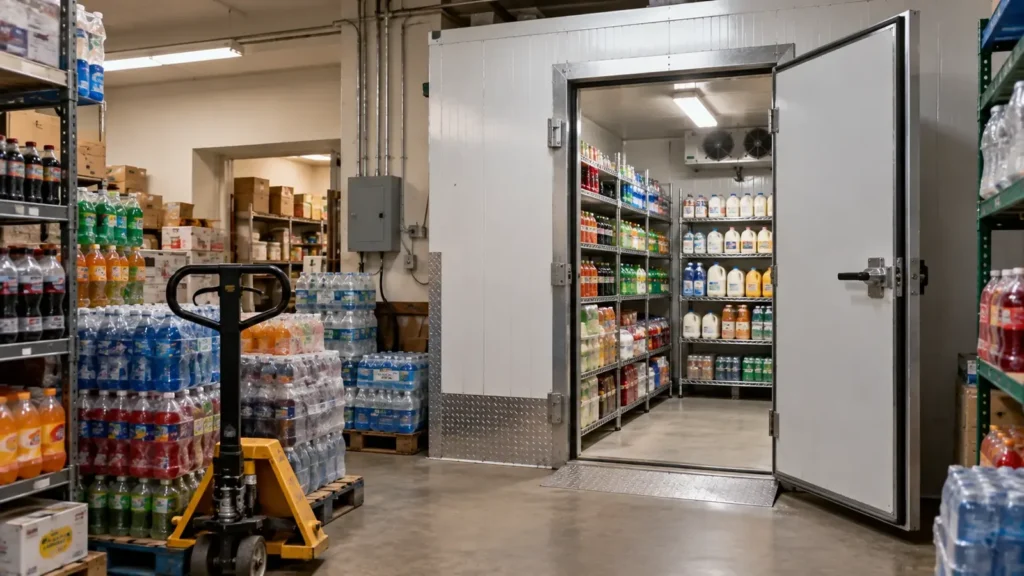
Grocery and market stores in Hattiesburg range from neighborhood shops to larger supermarkets. All depend on their back-room walk-ins to hold stock between delivery and shelf.
How grocery stores use walk-ins
Stores use separate boxes for dairy, produce, meat and frozen goods, and sometimes beer and beverages. Deliveries arrive on pallets, staff stock shelves throughout the day and doors are open often. Stock is dense, airflow can be blocked by cases stacked against evaporators and long run times wear out equipment.
Where the pressure comes from
| Pressure point | What tends to fail |
|---|---|
| Pallet deliveries | Warm loads and long door-open times |
| Dense stacking | Blocked airflow and warm pockets |
| Constant stocking | Door and gasket wear |
| Long run times | Motor, fan and compressor wear |
| Hot weather | High head pressure and heat load |
| Storm outages | Power loss with large stock value |
What repair help covers
Repair help covers warm boxes, iced coils, fan and compressor faults, gaskets, hinges, controls, sensors and electrical problems in dairy, produce, meat and freezer boxes. A technician can also look at load patterns and airflow so the boxes keep up with the store's stocking.
Food safety and records
Grocery stores are inspected under food-safety rules. Keep temperature logs for every box, use working thermometers and record any failure and repair. Ask the health department what records are required and how to handle product after a failure.
How to prevent breakdowns
- Log temperatures for each box at fixed times.
- Keep stock clear of evaporators and doors.
- Clean condenser coils before summer.
- Replace worn gaskets and strip curtains.
- Consider temperature alarms for after-hours protection.
- Keep a plan for moving stock if a box fails.
If the walk-in fails
If a box fails, probe the product, record times and call for repair. Move high-risk stock such as dairy and meat first. Ask the health department what to do with product that may have warmed. The outage guide shows how to decide.
Planning around delivery and season
Schedule maintenance for the quiet hours and the quiet months. Before summer, clean the condensers and check fans and gaskets. Before the holidays, when stock volumes rise, have every box checked. On delivery days, stage the stock so doors are open as briefly as possible, and put the most perishable items away first. Ask your suppliers about their delivery windows, so nothing arrives when a repair is under way.
Protecting stock value
A single failed box can hold a large amount of product. Weigh the cost of a temperature alarm, backup storage and a service agreement against a single loss. Many stores also check with their insurer about coverage for spoilage from equipment failure or power loss, and keep records that support a claim. The spoilage insurance page explains what to ask.
What to tell us when you call
- Which box: dairy, produce, meat or freezer.
- The reading, how long it has been high and what stock is inside.
- Whether the outdoor unit and fans run.
- Any ice, noise, water or smell.
- Whether other boxes are affected.
- The store hours, so work can be planned.
Related: temperature logs and strip curtains. See the who we serve page, the troubleshooting guide, the maintenance checklist and food safety in Mississippi.
Smaller stores: see convenience store walk-in repair.
Questions from grocery store managers
How quickly do I need to act on a warm box?
Immediately. Product value is at stake, so probe, record and call for repair.
Should I install alarms?
A temperature alarm is worth considering, especially for after-hours protection.
Can you repair dairy and freezer boxes on the same visit?
Describe both problems when you call, and the visit can be planned around them.