
Butcher shops and meat processors rely on walk-in coolers and freezers for hanging, aging and storing product. Steady temperature, humidity control and wash-down resistance matter. Failures usually come from heavy loads, wet conditions and door wear. Call for repair at the first warm reading.
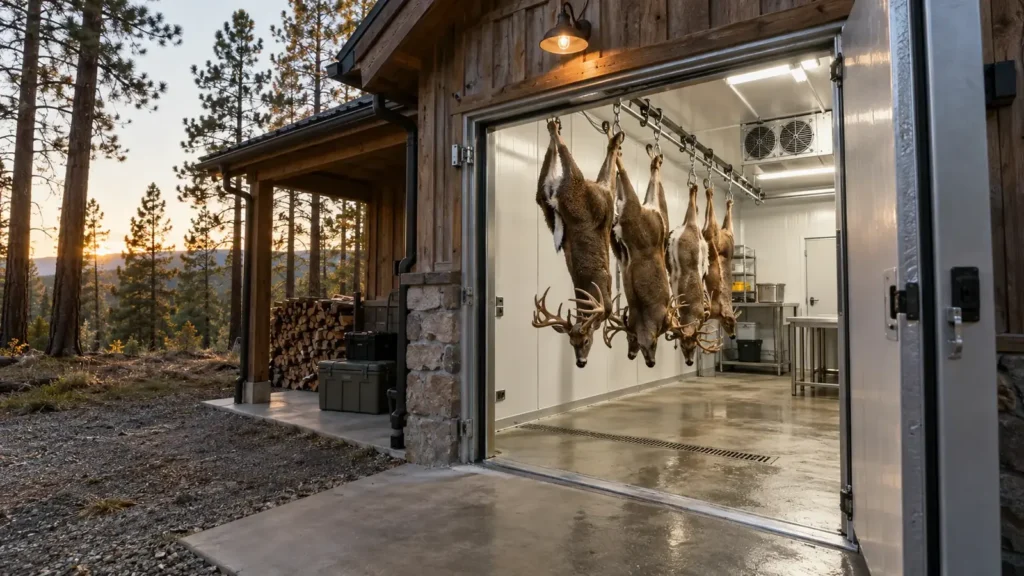
For a butcher in the Hattiesburg area, the walk-in is the business. A day of warm meat can end the week's profit, and customers who buy for the freezer expect the cut to have been kept cold.
How butchers and processors use walk-ins
Butcher shops have coolers for fresh cuts, aging rooms for beef, and freezers for packaged meat. Processors handling game, hogs or beef during busy seasons may add cold rooms with rails and hooks. Rooms are washed down often, floors have drains and loads are heavy and cold. Blood, fat and moisture are a constant.
Where the pressure comes from
| Pressure point | What tends to fail |
|---|---|
| Wash-down | Water in seams, wiring and controls |
| Heavy carcasses and rails | Load on floors, doors and shelves |
| Seasonal surges | Deer, hog and holiday orders overload the system |
| High humidity | Frost, mold and sweating |
| Fat and residue | Dirty coils and drains |
| Hot processing areas | Heat leaking into the cold room |
What repair help covers
Repair help covers warm boxes, iced coils, fan and compressor faults, gaskets and doors, controls, sensors and electrical problems. It also covers drain problems and moisture issues common in wet, meat-processing environments.
Food safety and records
Meat and poultry are temperature-controlled foods held at 41 degrees Fahrenheit or below, and frozen product must stay frozen. Meat processors may be subject to additional inspection programs beyond ordinary retail rules. Ask the health department and any inspection authority what applies to your operation, and keep detailed logs.
How to prevent breakdowns
- Log the temperature of every room daily.
- Keep drains clear and floors clean.
- Protect electrical parts from wash-down water.
- Clean coils and fan guards regularly.
- Do not overload during peak season without checking capacity.
- Check door seals and closers.
If the walk-in fails
If a meat cooler warms, probe the product, keep the door closed and call for repair. Move product to another cold room or refrigerated truck if the repair will take time. Follow your inspection authority's direction on what to keep. See how long food is safe for general reasoning.
Planning around the seasons
Butchers and processors have busy seasons: hunting season, holidays and summer grilling. Schedule a full check ahead of each, including coils, fans, gaskets, drains and controls. During the busy season, check the temperature more often and stage loads instead of loading everything at once. After the season, clean and record what needs attention before the next.
Moisture and wash-down
Wet environments shorten equipment life. Ask about sealed electrical fittings, stainless steel components and drain design if you are replacing or repairing. Encourage staff to wash gently around the evaporator and controls. After each wash, check that water is draining away and that no pooling remains, since standing water can freeze and cause hazards.
What to tell us when you call
- Fresh cooler, aging room or freezer.
- The reading, the target and how long it has been off.
- How much product is inside.
- Whether it was washed down recently.
- Any ice, water, noise or smell.
- Access for the technician around your processing schedule.
Related: deer cooler temperature and aging and smell and mold. See the who we serve page, the troubleshooting guide, the maintenance checklist and food safety in Mississippi.
Questions from butchers and meat processors
Can you work in a wet processing room?
Describe the conditions when you call. Access and timing may need planning.
How do I protect meat during a repair?
Move product to another cold room or truck, and keep logs of temperatures.
Why is there frost on my aging room coil?
Humidity or defrost issues. See the defrost pages or ask a technician.