
Relocating a walk-in means recovering the refrigerant, disconnecting power and drains, taking the box apart panel by panel, moving it, then reassembling, sealing, piping, evacuating, charging and testing it at the new site. Removal follows the same first steps, with the refrigerant recovered and the old equipment disposed of properly. Call with the size, the current location and where it is going.
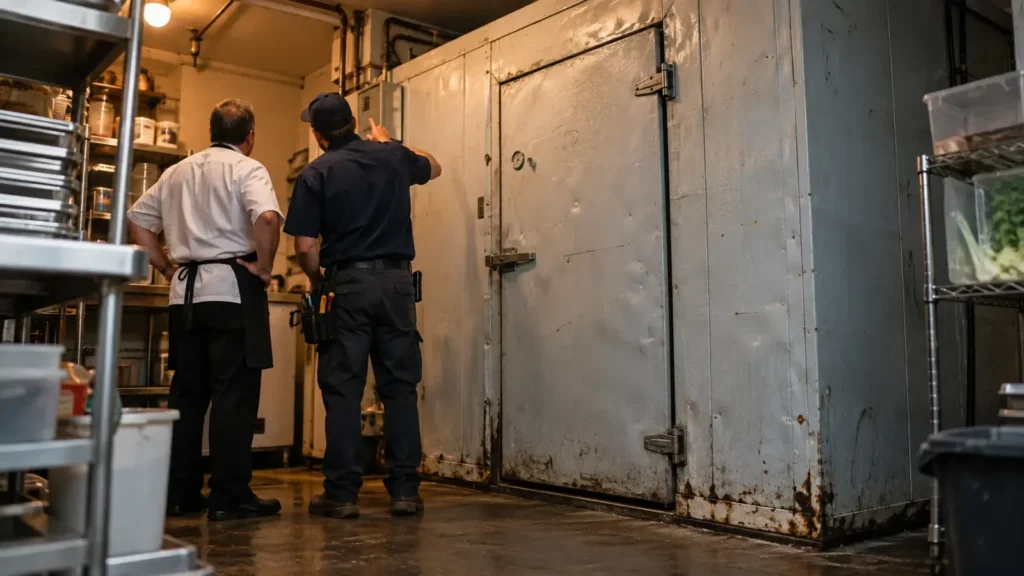
Restaurants move, kitchens are remodeled, farms reorganize and buyers find used walk-ins for sale. In each case a walk-in has to come apart and either go back together somewhere else or leave the site for good. Doing it carefully protects the panels, the refrigeration system and anyone handling it.
When relocation or removal comes up
- A business is moving to a new building.
- A kitchen remodel needs the walk-in in a different spot.
- A used walk-in has been bought and needs moving.
- An old or failed walk-in is being replaced.
- A building is being sold or a lease is ending.
How a relocation works
- Survey both sites. Check the box size, condition, the new floor, power, drainage and access.
- Empty and clean the box. Move food to other cold storage first.
- Recover the refrigerant. A certified technician recovers it into a cylinder. Refrigerant must never be vented.
- Disconnect safely. Power is isolated, and lines and drains are disconnected and capped.
- Take the box apart. Panels are unlocked, labeled and stacked so they go back in the same order.
- Move it. Panels, door, condensing unit and evaporator are moved and protected from damage.
- Reassemble and seal. The floor is prepared, panels are locked and seams resealed, and the door is adjusted.
- Reconnect and start up. Lines are run and insulated, the drier is replaced, the system is pressure tested, evacuated, charged by weight and tested.
How removal works
Removal starts the same way: empty the box, recover the refrigerant and disconnect power and drains. The panels and equipment are then taken out of the building. Metal parts can often be recycled, and refrigerant must be handled under EPA rules. Ask what will happen to each part and keep the record of refrigerant recovery. See why a certified technician must handle refrigerant.
Is it worth moving?
| Move it if | Replace it if |
|---|---|
| Panels are dry, sound and not crushed | Panels are wet, rusted or soft |
| The refrigeration is in good shape | The system is old or on a phased-down refrigerant |
| The size suits the new site | The new site needs a different size |
| Door and floor are in good condition | The floor or door frame is damaged |
See the repair or replace guide and panel and floor repair.
Buying a used walk-in
A used walk-in can be good value, but have it inspected before you buy. Check the panels for water damage, the door and gaskets, the refrigerant type and age of the condensing unit and whether all parts are included. Ask whether the refrigerant was recovered properly when it was taken down. See the brands guide for reading nameplates.
Preparing for the move
- Plan cold storage for food during the move.
- Confirm the new location has a level floor, power and a drain route.
- Arrange a dedicated circuit at the new site with an electrician.
- Check doorways and access for panels and equipment.
- Ask about permits if the walk-in will sit outdoors.
- Take photos of the box and nameplates before it comes apart.
What to tell us when you call
- Size of the walk-in and whether it is a cooler or freezer.
- Where it is now and where it is going, or whether it is being removed.
- Indoor or outdoor at each site.
- Your timeline.
- Nameplate photos of the box and condensing unit.
For a new box instead, see walk-in installation.
Relocation and removal across the Pine Belt
We move and remove walk-ins across Hattiesburg, Petal, Oak Grove, West Hattiesburg, Purvis and Laurel, including moves between buildings and removals during kitchen remodels. Refrigerant is recovered properly and the box is labeled and reassembled with sealed seams. Call to plan the timing so your food is protected during the move.
Questions about walk-in cooler relocation and removal
Do you relocate and remove walk-in coolers?
Yes. Call with the size, the current location and where it is going.
Can a walk-in be moved without losing the refrigerant?
The refrigerant is recovered before the system is opened and reused or handled under EPA rules.
Will the panels go back together tightly?
Sound panels usually do. Seams are resealed and the door adjusted at the new site.