
Walk-in panel and floor repair fixes the insulated box itself: dented or cracked skins, failed seams and sealant, wet or crushed insulation and damaged floors. Signs include sweating or ice on outside walls, frost patches inside, soft floor spots and a unit that runs constantly. Small damage can be repaired and sealed; wet panels are usually replaced.
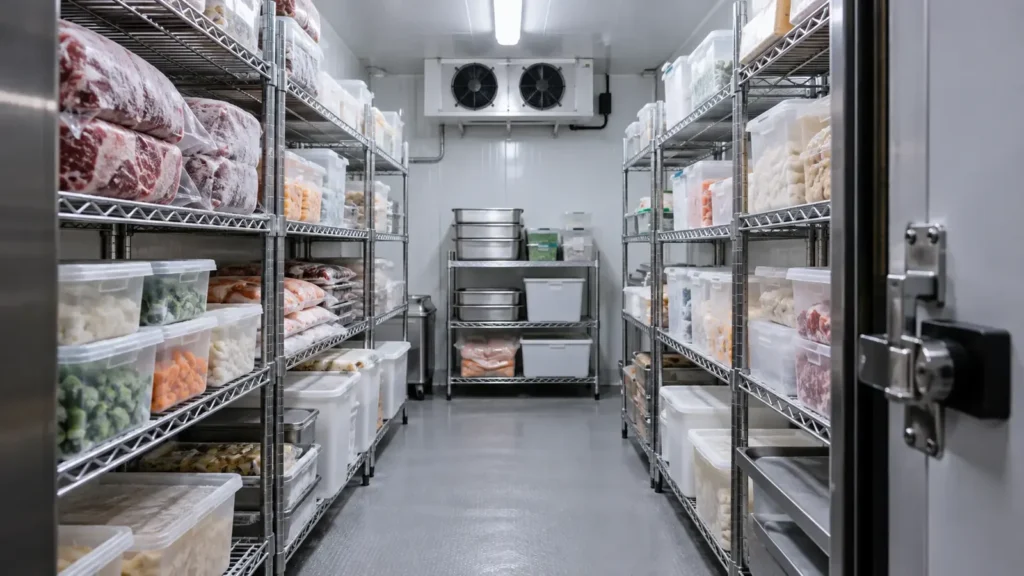
A walk-in is only as good as the box around it. In Hattiesburg humidity, a small crack or open seam pulls in moist air that turns into ice, mold and long run times, and the refrigeration system gets the blame.
How a walk-in box is built
Most walk-ins are made of insulated panels: foam sandwiched between metal or fiberglass skins, joined with cam-lock fittings and sealed at the seams. Floors are either insulated panels with a durable surface or an insulated slab. The panels keep heat out and the vapor-tight skins keep moisture out of the foam. When either fails, performance drops. See insulation, panels and floors for background.
Signs of panel or floor damage
- Sweating, frost or ice on the outside of a wall or ceiling.
- Frost patches or ice ridges on the inside of a panel.
- Soft, spongy or bulging floor areas.
- Gaps at corners and seams where light or air comes through.
- Dents, punctures or cracked skins from carts and pallets.
- Rust, bubbling paint or mold along seams.
- The unit running constantly with no equipment fault found.
Common causes
| Cause | Result |
|---|---|
| Cart and pallet impacts | Dents, punctures and cracked skins |
| Failed sealant at seams | Air leaks, condensation inside walls |
| Washing with too much water | Water soaking into seams and foam |
| Roof leaks on outdoor boxes | Wet insulation, rust, ceiling sag |
| Heavy loads on floors | Cracked or crushed floor panels |
| Freezer floor without proper insulation or heat | Frost heave under the floor |
What repair involves
- Seams and corners: cleaning, re-tightening cam locks and resealing with the correct sealant.
- Dents and cracked skins: patching and sealing so moisture cannot get into the foam.
- Penetrations: resealing holes for lines, wiring and drains.
- Wet or crushed panels: usually replaced, because wet foam does not insulate.
- Floors: surface repairs for wear, panel replacement for structural damage.
- Outdoor roofs: resealing or re-roofing to stop leaks.
Repair or replace the box
A few damaged areas on an otherwise sound box are worth repairing. If many panels are wet, the floor is failing and the box is old, replacing the box may cost less over time than repeated patching. The refrigeration system may still be usable on a new box if it is in good condition and correctly sized. See the repair or replace guide.
Preventing damage
- Fit bumpers or guards where carts hit walls and corners.
- Wipe surfaces instead of flooding them during cleaning.
- Check seams and sealant every year.
- Do not drill through panels without a plan to seal the hole.
- Inspect the roof of an outdoor box twice a year.
- Keep heavy loads within the floor rating.
What to tell us when you call
- Where the damage is and how large.
- Whether you see ice, sweating, rust or soft spots.
- Indoor or outdoor box, cooler or freezer.
- Approximate age and whether the floor is a panel or a slab.
- Photos of the damage, inside and outside.
Related: condensation and humidity and ice on the floor or ceiling.
Ice under a freezer floor
A walk-in freezer on a concrete slab can slowly freeze the ground underneath if the floor insulation is missing or damaged. Over months the frozen ground expands and lifts the slab, cracking the floor and twisting the door frame. Signs include a door that suddenly binds, cracks in the floor near the walls and frost at the floor edges. This needs prompt attention, because the damage grows. Ask the technician to check for floor heating or ventilation under the slab where it was designed in.
Moisture is the real enemy
In Mississippi humidity, moisture enters any gap in a cold box. Once it is in the foam, it freezes, expands and spreads, which is why a small leak becomes a big problem. Keeping seams sealed, cleaning without flooding and repairing punctures promptly protect the box for years.
Questions about walk-in cooler panel and floor repair
Can a dented panel be repaired?
Often yes, if the skin is sealed and the foam is dry. Punctures that let water in are more serious.
Why is the outside of my walk-in sweating?
Cold is reaching the outer skin, usually through a seam leak or damaged insulation.
Do panels need replacing if the foam is wet?
Usually. Wet foam loses its insulating value and can grow mold.