
Walk-in coolers serve homes, hunting camps and small farms as well as businesses. These boxes are often used seasonally, built from kits or conversions and left idle for months, so they fail differently from restaurant units. The same repair skills apply. Start the box early, keep coils clean and call for repair at the first warm reading.
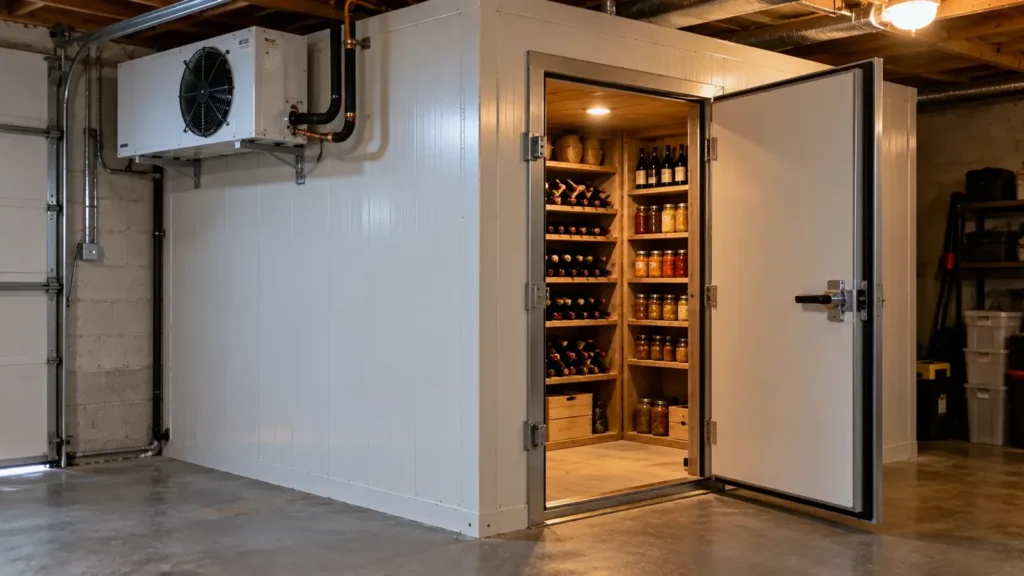
Around Hattiesburg and the Pine Belt, a walk-in cooler might sit behind a farmhouse, in a hunting camp near the De Soto National Forest or in the garage of a family that buys in bulk. These owners rarely have a maintenance contract or a kitchen manager watching the thermometer, so problems often show up late.
Who uses walk-ins outside of business
| Owner | Typical use | Typical pattern |
|---|---|---|
| Homeowners | Bulk food, drinks, entertaining, garden harvest | Year-round, light load, little attention |
| Hunters and camps | Chilling and aging deer and other game | Idle most of the year, heavy use in season |
| Small farms | Produce, eggs, milk, cut flowers | Seasonal peaks at harvest |
| Market vendors | Holding stock before farmers markets | Weekly cycles, warm loads |
| Small producers | Honey, baked goods, specialty foods | Steady, small business use |
Each group has a dedicated guide: home walk-ins and cold rooms, hunter and game coolers and farm and market walk-ins.
How these walk-ins differ from restaurant boxes
- Seasonal use. A box that sits off for months can have dried gaskets, seized fans, nesting insects and stuck controls when it is switched back on.
- Varied construction. Some are factory panel boxes, some are kits and some are converted rooms or sheds. Conversions often use equipment that was not designed for cold storage.
- Outdoor exposure. Many sit outside, where sun, rain, pine needles and storms reach the equipment.
- Little monitoring. Nobody may look inside for days, so a failure can go unnoticed.
- Surge loads. A harvest, a successful hunt or a big family event can overload a small system.
The most common problems
| Problem | Usual cause | Read more |
|---|---|---|
| Will not cool after sitting idle | Dirty coil, dead capacitor, stuck fan, refrigerant loss | Not cooling |
| Coil freezes into a block | Air conditioner conversion, defrost or airflow issue | AC conversions |
| Warm in hot weather only | Dirty condenser, undersized unit, sun on the equipment | High head pressure |
| Water or ice on the floor | Blocked drain, leaking door, defrost fault | Water leaking |
| Trips the breaker | Electrical fault, failing compressor, storm damage | Tripping breaker |
| Musty smell or mold | Moisture and long idle periods | Smell and mold |
A seasonal care plan
- Before the season. Clear the outdoor unit, clean the condenser, check the door and gasket, start the box and watch it for a week.
- During use. Keep a thermometer inside and check it daily. Load in stages so the system can keep up.
- After the season. Empty, clean and dry the box. Decide whether to leave it running or shut it down, and prop the door if it will be off so mold does not grow.
- Once a year. Have a technician look at the refrigeration, electrical parts and controls.
The full checklist is in the maintenance guide.
Food safety still matters at home
A home or camp walk-in is not inspected, but the same science applies. Keep perishable food at 41 degrees Fahrenheit or below and frozen food frozen, and use a probe thermometer rather than trusting a dial. For venison, follow the guidance from Mississippi State University Extension and the Mississippi State Department of Health. The deer cooler temperature guide and how long food is safe page give practical detail.
Power and storms
Rural and outdoor walk-ins in the Pine Belt are exposed to thunderstorms, lightning and outages. Surge protection, a restart delay and a plan for where food goes during a long outage protect both the equipment and what is inside. See surge protection and storm recovery. A generator must be sized for compressor start-up and connected by an electrician.
Repair, upgrade or replace
Many home and farm walk-ins are older or second-hand. If yours keeps failing, compare the cost of repeated repairs with a proper refrigeration system sized for the box. A converted air conditioner may be cheap to start but costly in lost food. The repair or replace guide and cost drivers page help with the decision.
What to tell us when you call
- Where the walk-in is: home, camp, farm or market, and how to reach it.
- Whether it is a factory box, a kit or a converted room, and what cools it.
- How long it sat idle and what it is doing now.
- The temperature it reads and what is stored inside.
- Any ice, noise, water or smell.
Choosing the right setup
If you are adding a walk-in at home, at camp or on the farm, the decisions you make at the start shape every repair bill that follows. A factory panel box with a matched refrigeration system is the most reliable choice. A kit box can be good if it is assembled carefully, with sealed seams and a proper floor. A converted room or shed is cheapest at the start but often struggles with heat, humidity and icing.
| Option | Strengths | Watch for |
|---|---|---|
| Factory panel walk-in | Designed insulation, sealed door, matched equipment | Higher upfront cost |
| Kit box | Lower cost, flexible size | Assembly quality, floor insulation, door fit |
| Converted room with refrigeration unit | Uses an existing space | Vapor barrier, insulation, drainage |
| Converted room with air conditioner | Cheapest start | Icing, limited temperature range, short life |
See sizing and load calculation and indoor vs outdoor walk-ins before you buy.
Where to put it
- Choose level, well-drained ground or a solid floor that can carry the weight.
- Keep the condensing unit in shade if possible, but with plenty of open air around it.
- Keep it away from trees that drop leaves, pine straw and sap onto the coil.
- Plan a dedicated electrical circuit with a disconnect, installed by an electrician.
- Think about access for a technician, including ladders and roof units.
- Plan where defrost water drains.
Running costs
A walk-in runs day and night, so small inefficiencies add up on the power bill. Clean coils, good door seals, LED lights and keeping the box out of direct sun all help. If you only need the box seasonally, weigh the cost of running it empty against the risk of problems on restart. See cost to run a walk-in.
Safety around a walk-in
Every walk-in you can enter should open from the inside, even when it is latched outside. This matters especially at camps and farms, where someone may work alone. Test the inside release, keep the light working and never padlock the door with anyone possibly inside. Keep children from playing in or near the box. See walk-in safety release.
Signs it is time to call
- The box will not reach temperature after a day of running.
- The coil keeps icing even after a thaw.
- The breaker trips more than once.
- The compressor hums, clicks or rattles.
- Oil stains appear around fittings.
- The power bill jumps without a reason.
Questions to answer before you call
A home, camp or farm walk-in usually has no service history on file, so the technician starts from scratch. You can save time and money by gathering a few facts first. Find the nameplate on the condensing unit and take a clear photo, since it shows the model, the refrigerant and the electrical rating. Note how old the box is, who installed it and whether anything has been changed, such as a new controller or a replacement fan. Write down what happened just before the problem began: a storm, a heavy load, a long idle period or a door left open. If you can safely do so, take a short video of the unit running and of the evaporator inside, including any noise.
These details let a technician arrive with the likely parts and spend less time guessing. They also help you compare advice if you get a second opinion.
Sharing a walk-in
Some hunting clubs, family properties and farm cooperatives share one walk-in between several people. Shared boxes fail more often because nobody owns the routine. Pick one person to check the temperature, keep the log and call for repair, and post the rules on the door: close it every time, do not stack against the fan, and report anything odd straight away. A simple whiteboard or notebook by the door works well. The daily and weekly checks can be adapted for a shared box.
Questions about walk-in coolers for homes, hunters and farms
Do you repair walk-ins at homes and farms?
Yes. Walk-in cooler repair covers homes, hunting camps and farms as well as businesses. Call and describe the setup.
Can a home walk-in use the same parts as a restaurant one?
Often yes, because the refrigeration parts are the same family. Converted units may need different parts or an upgrade.
Should I turn my walk-in off between seasons?
It depends on the box and where it sits. If you turn it off, empty, clean and dry it and leave the door ajar.